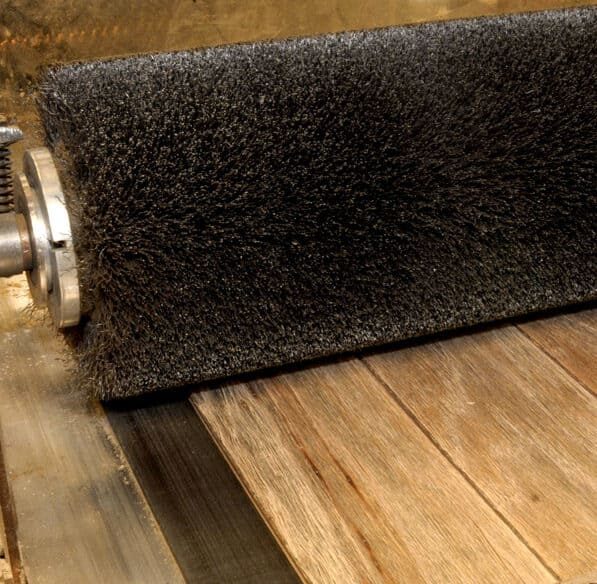
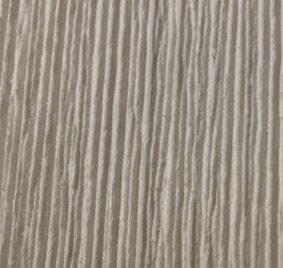
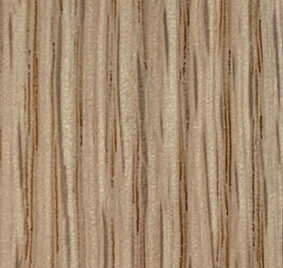
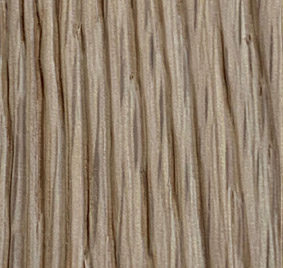
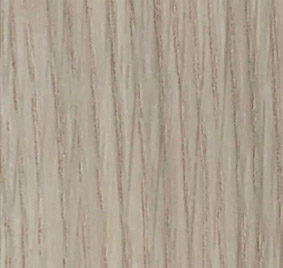
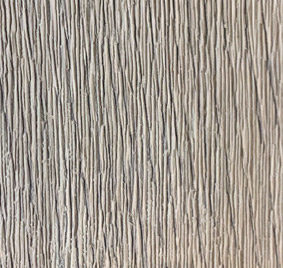
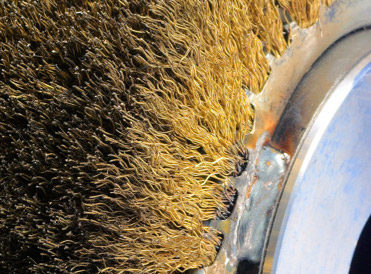
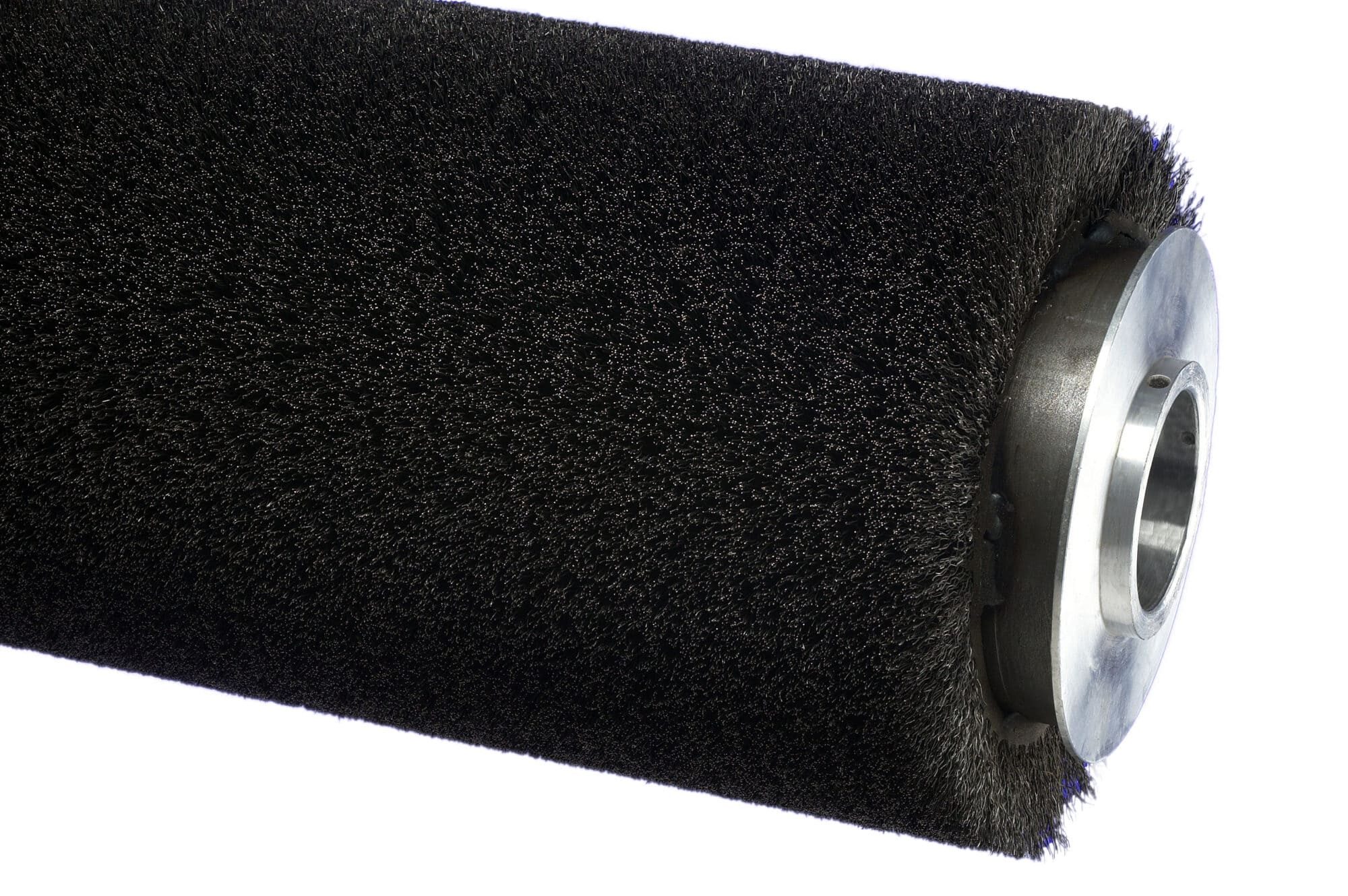
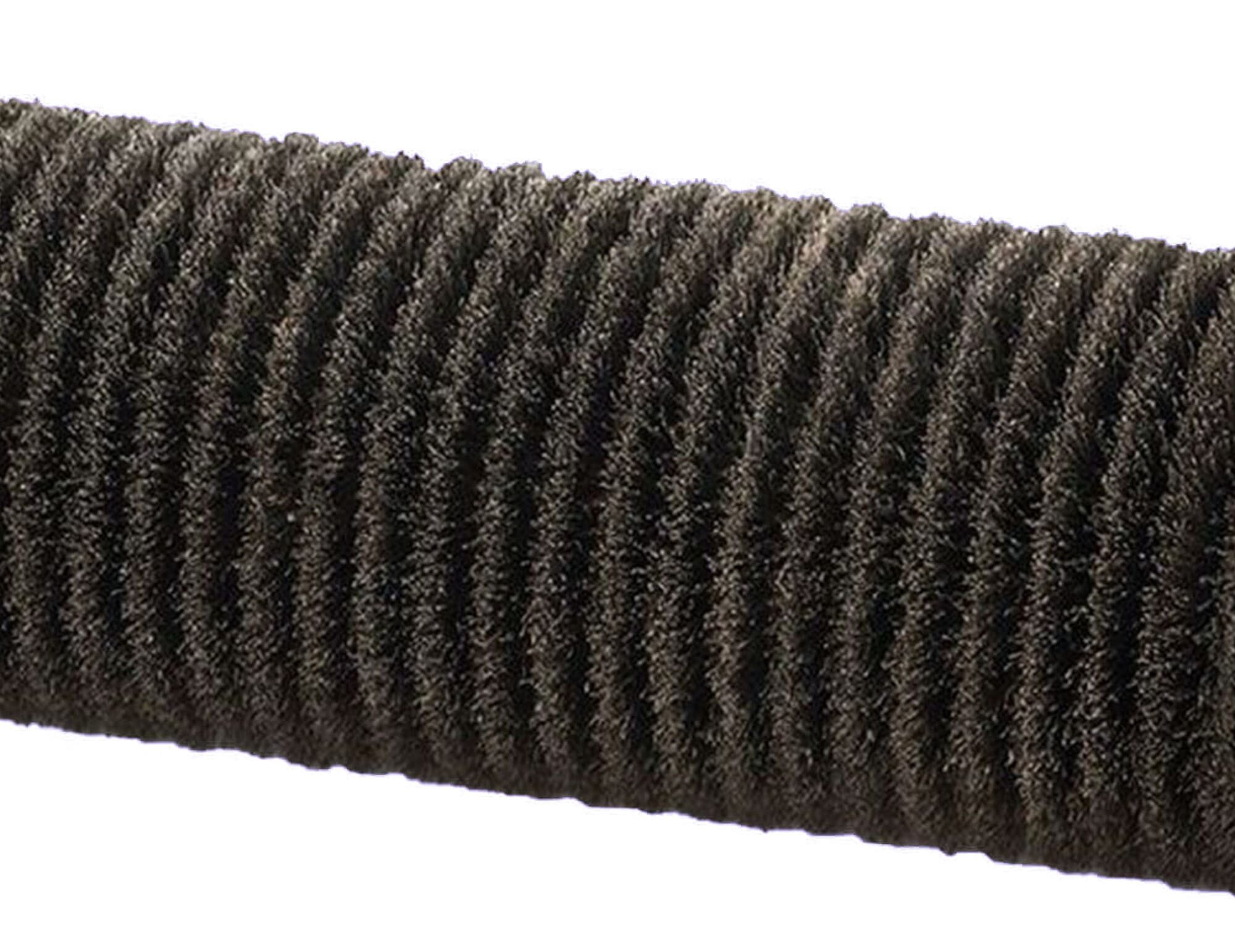
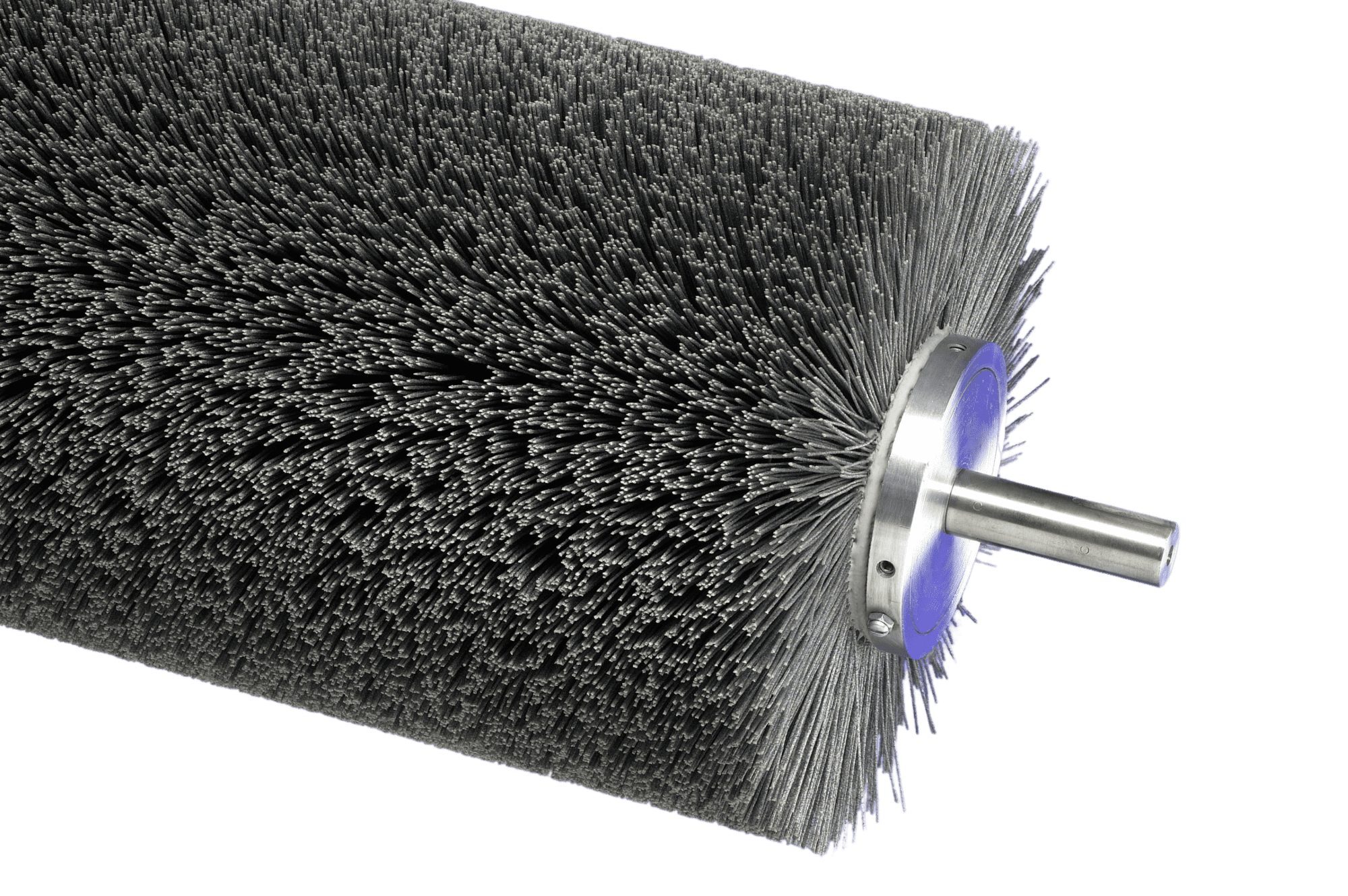
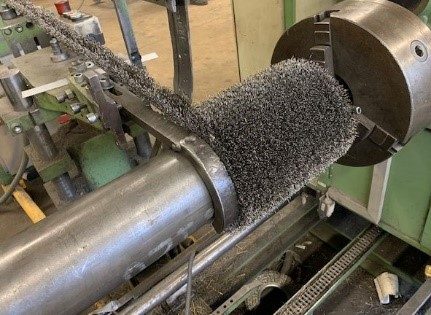
Our brushes utilize a wide range of bristle types and patterns to produce almost any distressed look.
Our wire brushes can be filled with carbon steel, stainless steel, brass, or brass-coated carbon steel filaments. They can be applied to the core in either dense wound or open wound patterns in smooth or rough trim finishes to structure both soft wood a hardwood product to any degree. Wire sizes are available ranging from fine .008″ to coarse .045″, to suit almost any wood distressing application. Industrial Brush has over 35 years of experience working with coatings suppliers, OEM machine builders, and manufacturers of wood products alike.
Before & After
Shown below is a selection of example looks on wood and wood-substitute products that were created in the Industrial Brush in-house test lab. Our test lab is a vital tool available to our customers to find the correct brush and the optimal brush RPM, feed rate, and brush contact.
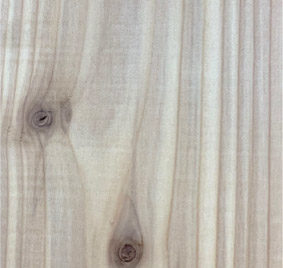
Before
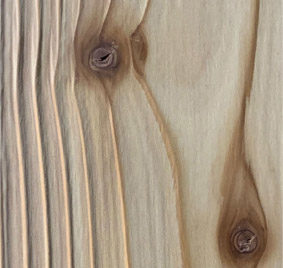
After
Softwoods
Working with Pine and Cedar using an open wound, soft wire brush followed by a a dense abrasive nylon brush is best to insure the structuring follows the natural grain in the wood.
Before
After
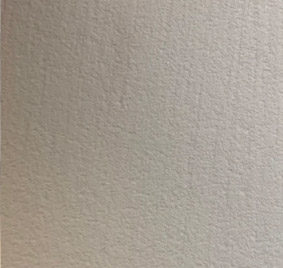
PVC and Wood Composite
Having no grain structure to work with distressing these types of products requires a dense, aggressive wire brush with a rough trim to simulate a wood grain pattern.
Before
After
Hardwoods
Working with Oak, Maple, Hickory and Cherry is trickier. As a general rule the more grain structure there is in the wood the better it is suited to distressing.
Before
After
Barn Siding
Rough sawn Siding is a look that is achievable with almost any type of wood. It requires a very aggressive, dense wire brush that is smooth trimmed and not denibbed with an abrasive nylon brush.
Wire Brushes that Work Better and Last Longer
Core Designs
Our brushes are custom-made for your application. Designs range from disposable quick-change sleeves to refillable stub-shaft cores. Core diameters range from 3″ up to 12″.
Wire Types
Stocked wire types include carbon steel, stainless steel, brass and brass coated carbon steel. We offer single strand and braided wire filaments.
Wire Sizes
Stocked wire sizes for wood distressing include: .012, .014, .016, .020, and .025″. Smaller and larger gauges are available on request.
Braided Wire Brush
Used for heavy distressing and structuring of hardwoods and composites.
Dense Wire Brush - "Smooth Trim"
Used for producing a rough sawn or barn siding look on any type of wood.
Open Wire Brush - "Rough Trim"
Used for producing a natural distressed look on hard and soft wood.
Abrasive Brush
Used after wire brushing to Defuzz and prepare the wood pores for finishing or for different looks.
Double Banded Channel Winding System
Our wire brushes are made using double-banded channel (DBC) winding technology. Customers will receive a brush tailor-made to match their exact needs because our solutions optimize the core design, filament size and type, and pitch density.
Brush density can be varied by changing the pitch of the spiral to be more open or bristle fill amount. Decreasing brush density is useful when more bristle flexibility is needed, or to more naturally follow the grain in softwood and hardwood structuring patterns. Stiffness is varied through filament type, diameter, and trim length. We can also vary the trim type on our wire brushes to be smooth-face or rough in order to accommodate the amount of randomness wanted in your distressed pattern.
Material Response and Grain Development During Structuring
Wood species vary significantly in hardness, porosity, and grain pattern. Earlywood and latewood densities influence how deeply the brush can cut and how the texture develops. Softwoods allow the brush to follow the grain naturally, while hardwoods require more controlled engagement to avoid uneven structuring. Composites and PVC demand aggressive filaments to create a simulated grain pattern. Understanding these material responses helps operators select constructions that produce consistent results across diverse substrates.
Construction Variables That Shape Distressing Performance
Wire filament brush behavior is defined by several controllable design elements:
Wire Type — Carbon steel, stainless steel, brass, and brass coated carbon steel each offer different stiffness and wear characteristics.
Wire Gauge — Fine gauges support subtle texture; coarse gauges create deeper structure.
Trim Style — Smooth trim produces uniform contact; rough trim introduces variation for natural looking patterns.
Winding Pattern — Dense wound patterns increase contact; open wound patterns allow more flexibility and grain following.
These variables allow finishing teams to tune the brush to the substrate and the desired visual effect.
Density, Flexibility, and Pattern Control in Production Settings
Brush density and filament flexibility determine how the brush conforms to the surface and how much variation appears in the final pattern. Lower density allows the brush to follow the grain more naturally, while higher density increases aggressiveness and surface coverage. Trim length and filament stiffness influence how the brush behaves under load, shaping the balance between uniformity and randomness in the distressed appearance. These factors help operators achieve consistent results across long production cycles.
FAQ
How Do Wire Types Influence Distressing Results?
Different wire materials vary in stiffness and wear behavior, which affects how the brush engages the surface and how the texture develops.
Why Does Wire Gauge Matter in Wood Structuring?
Gauge determines how aggressively the brush cuts into the surface. Fine gauges support subtle texture, while coarse gauges create deeper structure.
What Role Does Brush Density Play in Pattern Formation?
Density influences how much contact the brush makes with the surface. Higher density increases aggressiveness, while lower density improves flexibility and grain following.
How Does Trim Style Affect the Final Appearance?
Smooth trim produces uniform contact, while rough trim introduces variation that can create more natural looking distressed patterns.
Need Additional Information?
Complete the form below and our brush experts will advise your company on the best brush for your application!