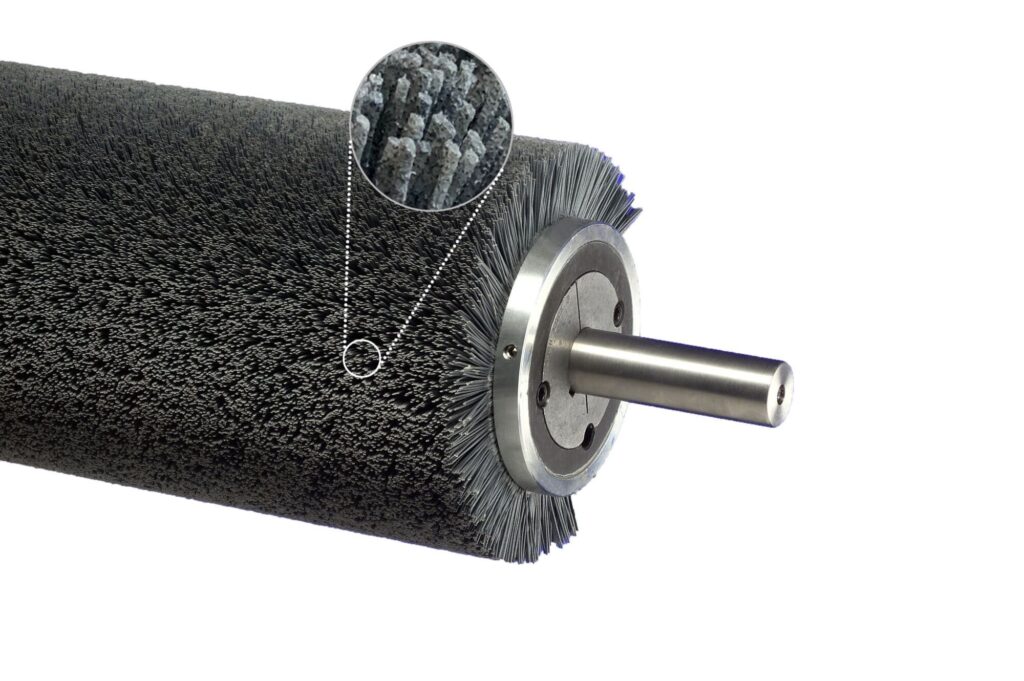
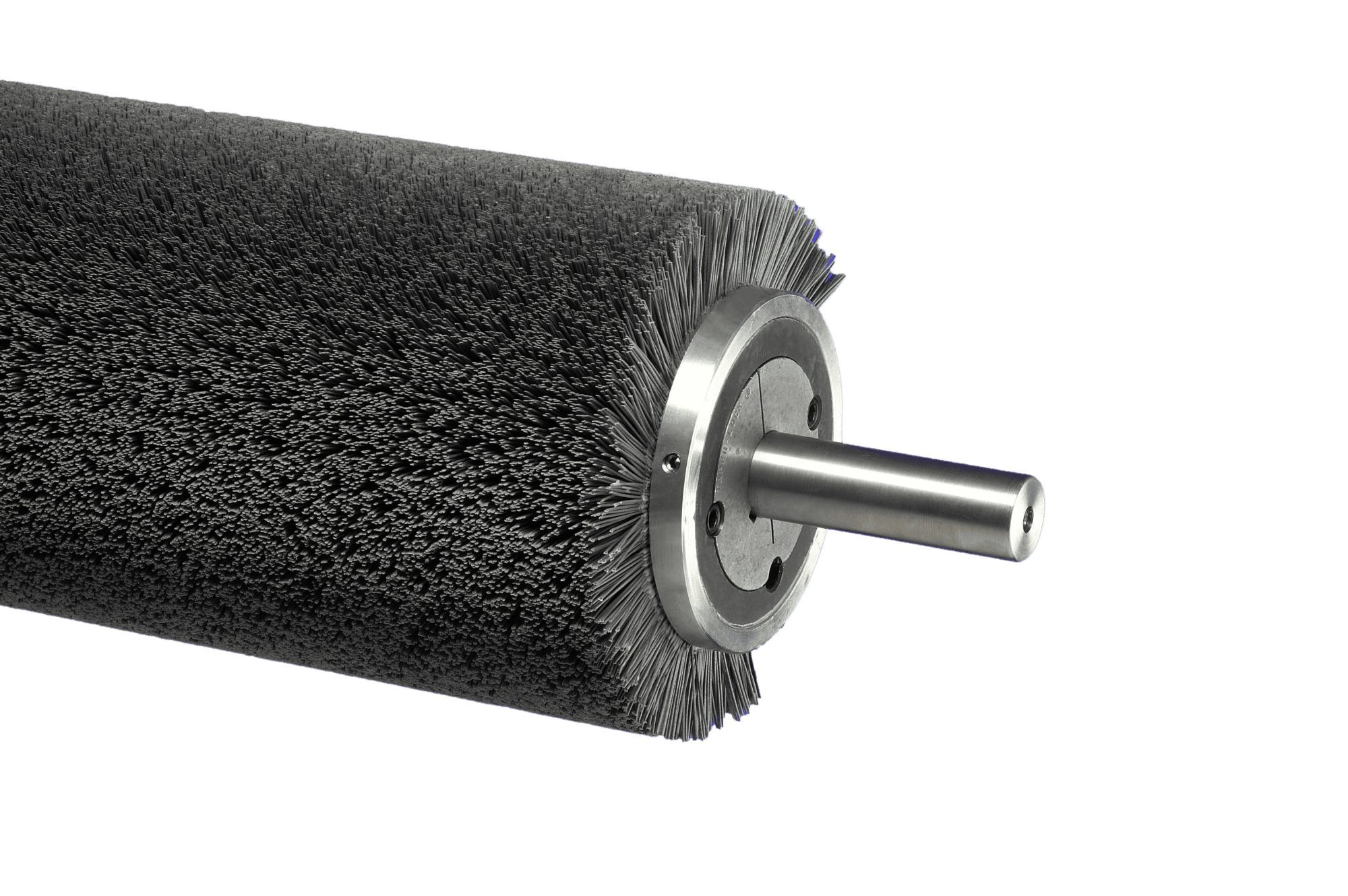
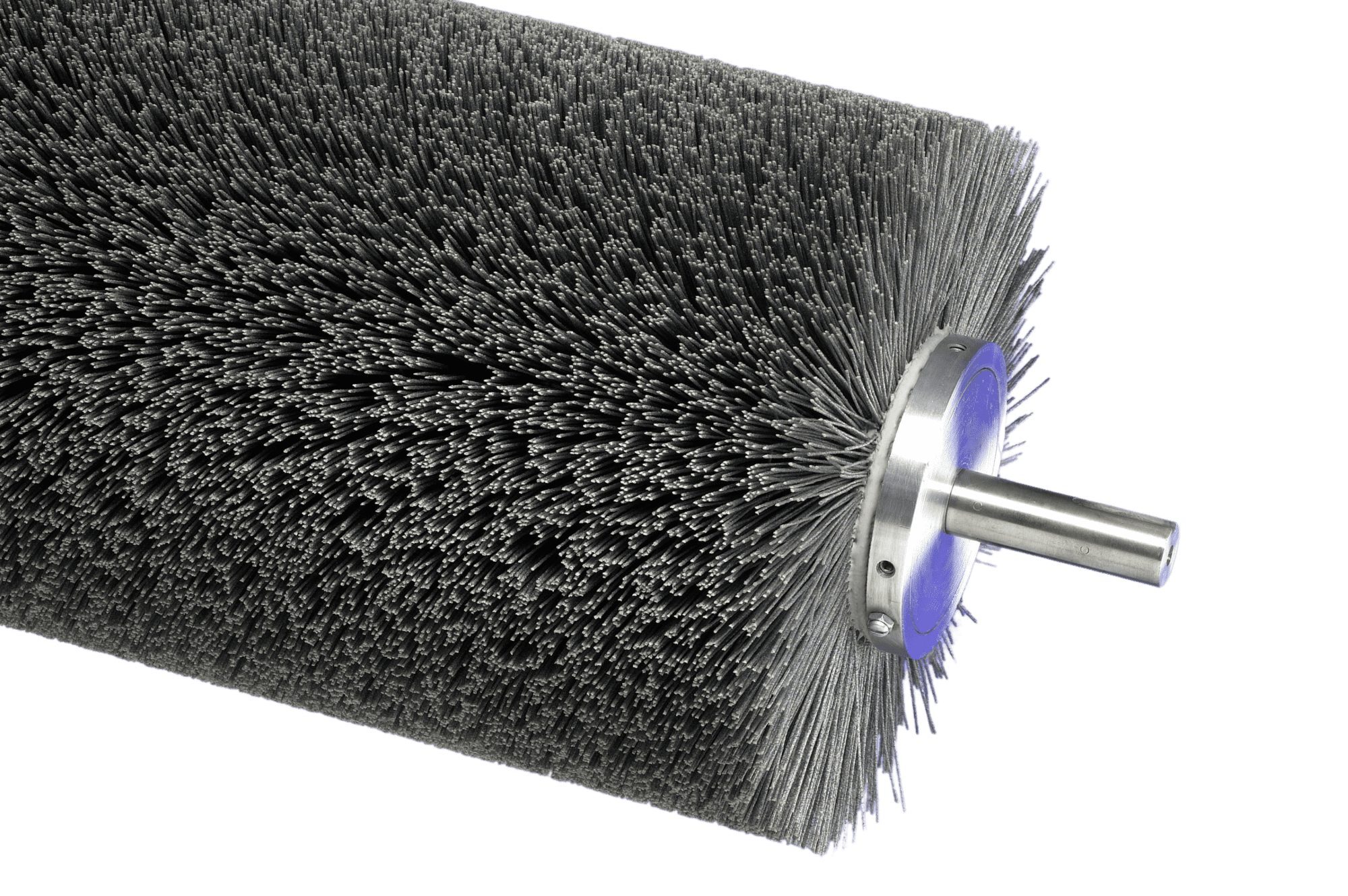
Industrial Brush manufactures its sanding brushes using Tynex® abrasive nylon.
Abrasive nylon filament is impregnated with abrasive during manufacturing, making it approximately 30% silicon carbide by weight. As the nylon wears down, new grit layers are continuously exposed providing stable sanding performance and added brush life. We offer grits ranging from fine 500 grit to coarse 46 grit to suit almost any wood sanding application. Industrial Brush has over 35 years of experience working with coating suppliers, OEM machine builders, and manufacturers of wood products alike.
Before and After
UnSanded White wood
Sanded White wood
White Wood Sanding
Prior to the application of stain, our Fineset sanding brush can be used to gently break sharp edges on parts. In the white wood stage, sanding brushes also remove excess dust from the pores of your wood to ensure even stain penetration without changing the dimensions of the part.
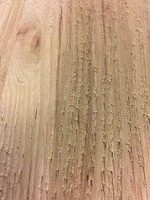
Grain Pop Before Denibbing
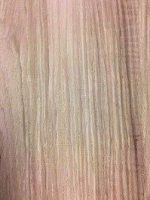
Grain Pop After Denibbing
Stain Denibbing
Once a stain is applied to raw (white wood) parts, tiny fibers called “nibs” are raised up in the wood grain. This is sometimes referred to as “grain pop”. Sanding stained parts with our Fineset denibbing brushes removes nibs without changing the stain color. This can yield significant cost savings compared to sanding these nibs at a later stage.
Sealer/Fill Coat Unsanded
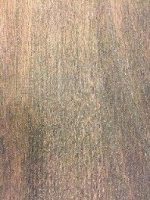
Sealer/Fill Coat Sanded
Fill Coat & Sealer Sanding
Finish is always applied to wood parts in layers. Using our sealer / fill coat sanding brushes to scuff the surface of the wood in between coats of finish is the best way to ensure proper adhesion. Our sanding brushes scuff the coating without breaking through the finish of most solvent, water-based, 100% solid, and UV coating systems.
Sanding brushes that work better and last longer.
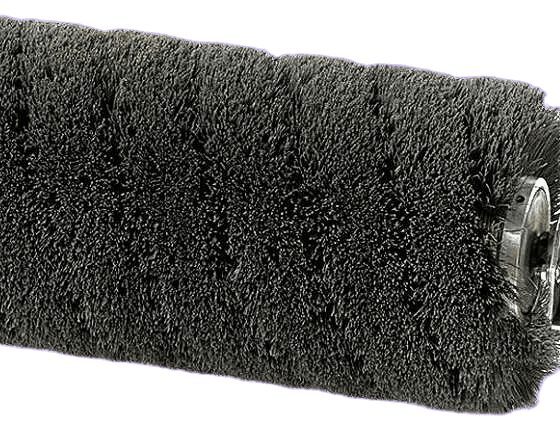
Sanding brushes have become a critical component of the finishing process. We have designs that are tailor-made for sanding flooring, flat panels, cabinet doors, molding, trim, and reclaimed wood. Our custom-designed brush patterns are made to suit a wide variety of applications at any step in your process. Some common configurations of Fineset sanding brushes are shown below.
Flat Part Sanding
Sanding brushes have become an important part of the finishing process for hardwood flooring, flat packed furniture, veneer panels and flush doors. Our Fineset dense brush maximizes the number of bristles per square inch resulting in more points of contact on the sanded surface. Fineset brushes provide a uniform sanding pattern across the surface of flat parts for whitewood sanding, stain denibbing and fill coat / sealer sanding.
Irregular Part Sanding
Sanding brushes have become an important part of the finishing process for cabinet doors, raised panel interior doors, molding and trim. We offer custom designed brush patterns to suit a wide variety of applications. Our Fineset spiral brush has longer bristles arranged in individual spiral rows. This relief in the bristles allows the brush to bend and conform to irregular surfaces. The small diameter of the bristles allows them to wrap around corners and sand in the smallest profiles without loss of detail in the wood.
Reclaimed Wood Sanding
Sanding brushes have become an important part of the recycling process for reclaimed timber products. They are an excellent choice to clean up reclaimed wood. We can recommend the proper grit, bristle length brush density and rotational speed to sand reclaimed siding, barn wood, decking, mushroom wood, and timbers without removing the natural patina in the wood. Our customers also have experience using our brushes for sanding burned-wood (Shou Sugi Ban).
Substrate Behavior and Grain Interaction During Structuring
Different materials respond uniquely to mechanical brushing. Softwoods allow the brush to track the grain with minimal resistance, producing natural-looking patterns. Hardwoods require more controlled engagement due to higher density and tighter grain. Composites and PVC require aggressive filaments to create a simulated grain pattern. Understanding these behaviors helps operators select constructions that maintain uniformity across diverse substrates.
Construction Factors That Influence Structuring Performance
Several controllable design variables shape how a wire filament brush interacts with the surface:
Filament Material — Determines stiffness, wear behavior, and how the brush engages dense or soft substrates.
Gauge Selection — Influences cut depth and the level of texture produced.
Trim Configuration — Affects uniformity, randomness, and how the brush conforms to the surface.
Winding Pattern — Controls contact area, flexibility, and pattern consistency across the workpiece.
These factors allow finishing teams to tune the brush to the substrate and the desired visual outcome.
Pattern Stability and Long-Run Consistency in Production Settings
Brush density, filament flexibility, and trim length influence how the brush behaves under load and how consistently the pattern develops across long production runs. Lower density allows the brush to follow the grain more naturally, while higher density increases aggressiveness and surface coverage. Predictable wear behavior supports stable performance across extended cycles, helping operators maintain uniform results across large batches.
FAQ
How Do Filament Materials Influence Structuring Results?
Different materials vary in stiffness and wear behavior, which affects how the brush engages the surface and how the texture develops.
Why Does Gauge Selection Affect Texture Depth?
Gauge determines how aggressively the brush cuts into the substrate. Fine gauges support subtle texture, while coarse gauges create deeper structure.
What Role Does Brush Density Play in Pattern Formation?
Density influences how much contact the brush makes with the surface. Higher density increases aggressiveness, while lower density improves flexibility and grain following.
How Does Trim Configuration Shape the Final Appearance?
Trim style affects uniformity and variation in the pattern, influencing how natural or controlled the distressed appearance looks.
Need Additional Information?
Complete the form below and our brush experts will advise your company on the best brush for your application!