
Stain Wiping Brushes
Home » Wood Finishing » Stain Wiping
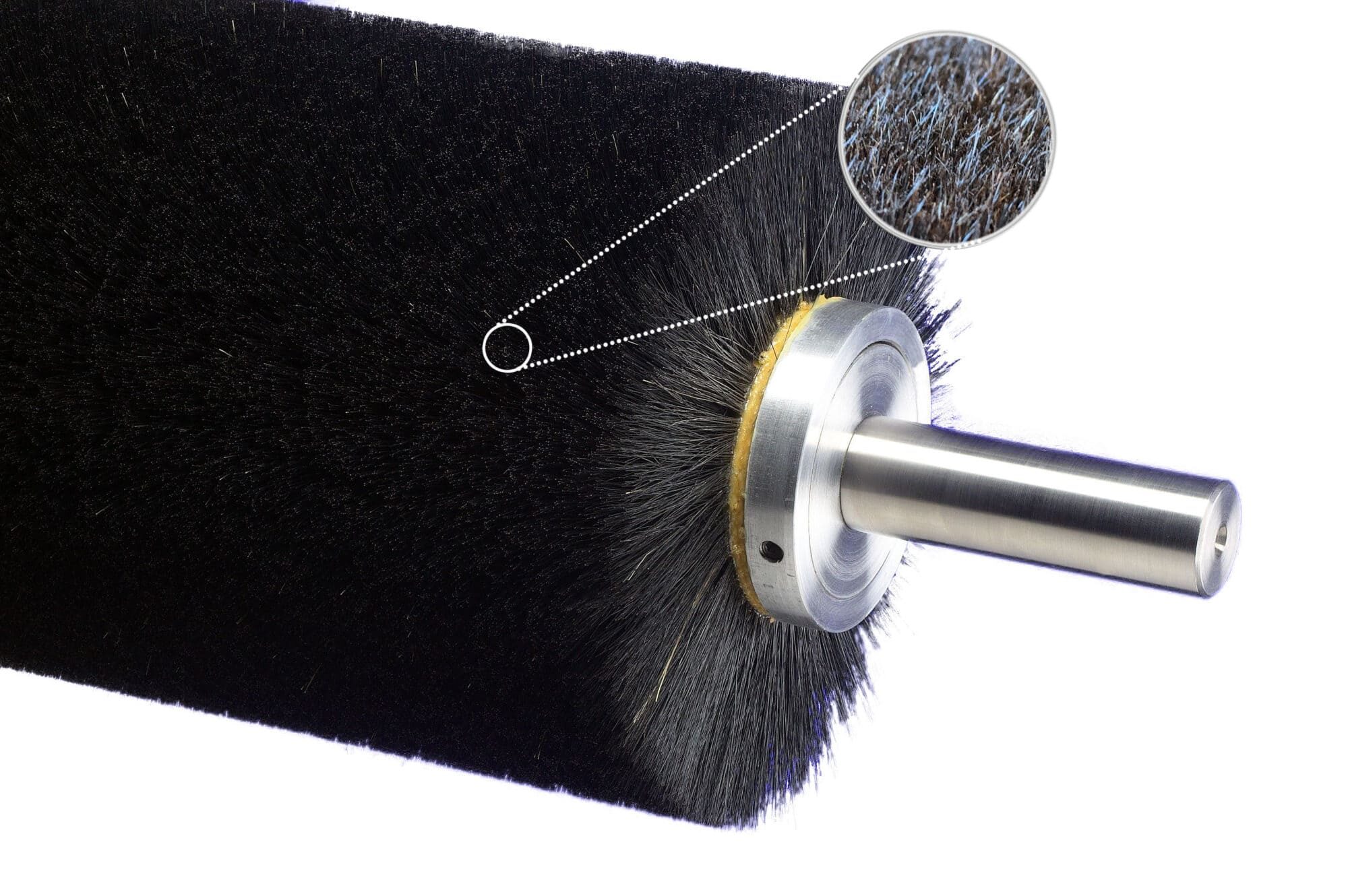
We use a wide range of bristle types and configurations to best apply your stain.
The variety of coating systems and finishes for wood products are seemingly endless, and we provide brush solutions for almost any type. Brush solutions are available for solvent based, 100% solid, UV, European Oil Stains, and more. If you are struggling with uneven stain penetration, white pore, uncoated edges, or color control, our expert team can help. Industrial Brush has over 35 years of experience working with coating suppliers, original equipment manufacturers (OEMs) and end users to optimize stain wiping. Our brush designs are custom tailored for each stain type based on the performance requirements of our customers. In this case, we’re glad the results give us a stain-legacy!
Our Brushes in the Field
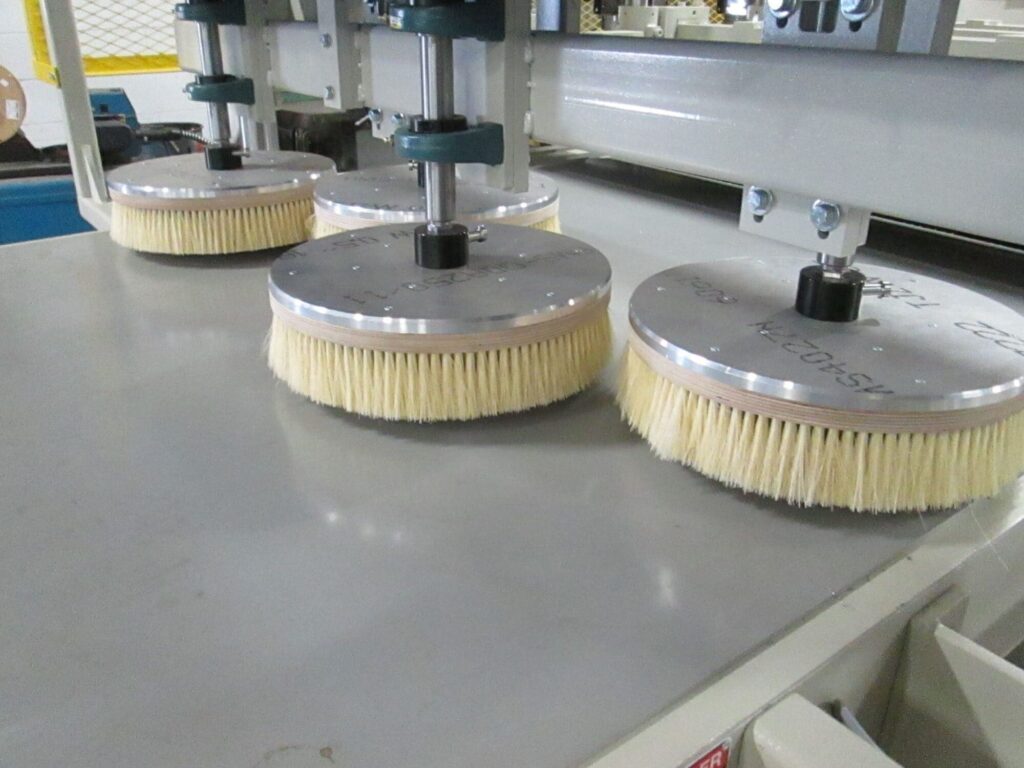
Photo courtesy of Dubois Equipment Company
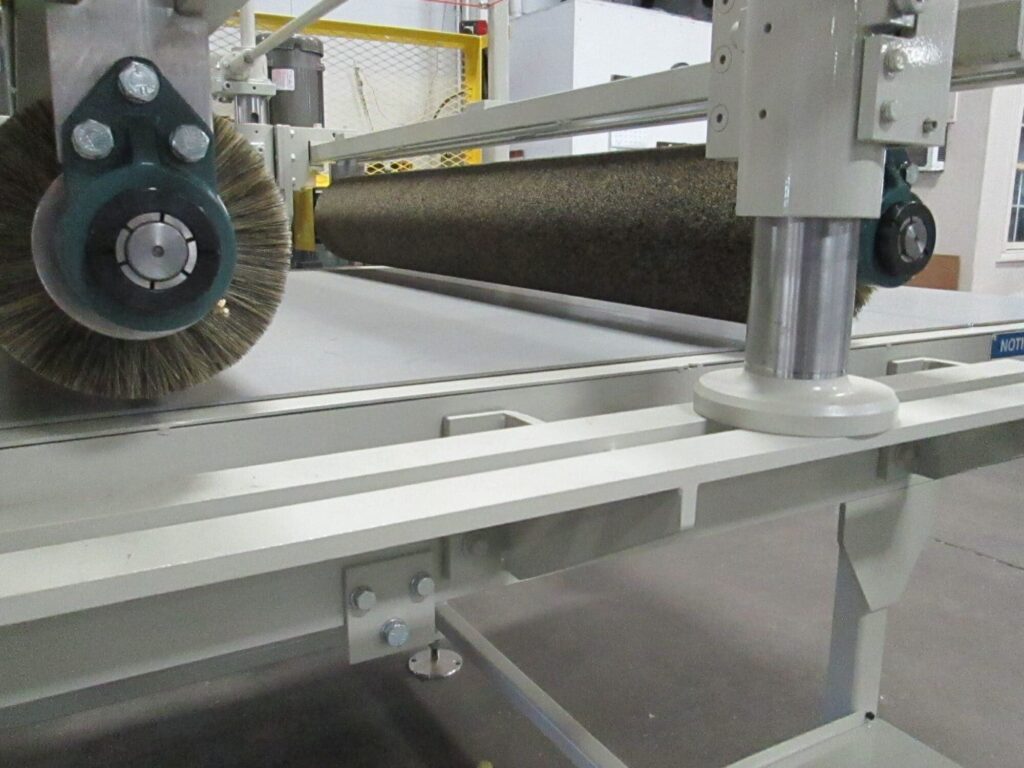
Photo courtesy of Dubois Equipment Company
Rotary Cup Nylon Brush
Tufted Nylon Brush
Fineset Tampico Brush
Fineset Boars Hair Brush
Substrate Interaction and Stain Penetration Behavior
Different materials absorb stain at different rates, and brush selection must account for these variations. Open-grain hardwoods require deeper penetration to avoid white pore. Dense species need controlled wiping to prevent uneven coloration. Textured or wire-brushed surfaces require brushes that can reach recesses without leaving uncoated areas. Understanding how the substrate responds to stain helps operators select constructions that maintain uniform color across diverse product lines.
Brush Design Factors That Influence Wiping Performance
Stain wiping behavior is shaped by several controllable design variables:
- Filament composition influences absorbency, stiffness, and how the brush interacts with the coating.
- Brush density affects how much stain is driven into the pores and how much excess material is removed.
- Trim configuration determines how the brush conforms to the surface and how effectively it blends marks.
- Fiber length influences wiping pressure and the uniformity of the final appearance.
These factors allow finishing teams to tune the wiping process for consistent color output.
Integration With Stain Wiping Equipment and Multi Stage Lines
Stain wiping brushes must be matched to the capabilities of the machine platform. Rotary cup brushes require stable cross-grain engagement to reach bevels and recessed areas. Cylinder brushes must align with the grain direction to drive stain into the pores. Brush diameter, mounting style, and rotational settings influence how the brush interacts with the coating and how uniformly the stain is distributed. Proper integration ensures compatibility with upstream application systems and downstream blending or removal stages.
Absorbency, Blending, and Final Surface Appearance
Absorbent fibers play a key role in blending brush marks and removing excess stain. Natural fibers such as Tampico, boar hair, and horse hair provide controlled absorption that helps regulate color intensity and surface uniformity. Synthetic fibers offer durability and consistent stiffness for high-volume production. Trim length and filament flexibility influence how the brush behaves under load, shaping the final appearance and ensuring consistent results across long production runs.
FAQ
How Do Filament Types Affect Stain Wiping Performance?
Filament composition influences absorbency, stiffness, and how the brush interacts with the coating, which affects penetration and surface uniformity.
Why Does Brush Density Influence Color Output?
Density determines how much stain is driven into the pores and how effectively excess material is removed, shaping the final color.
What Factors Improve Consistency on Stain Wiping Lines?
Correct brush alignment, stable machine settings, and predictable filament behavior help maintain uniform results across varied substrates.
How Does Trim Configuration Affect the Final Appearance?
Trim style influences how the brush conforms to the surface and how effectively it blends marks or removes excess stain.
Need Additional Information?
Complete the form below and our brush experts will advise your company on the best brush for your application!